











How do you plan a corporate holiday party employees love? If the job just landed on your desk, good news: it’s a fun one. In this blog, we’ll decide who’s invited and what to spend, pick a date your team can make, weigh the office against a venue and work out how much room you need.
We’ll also choose how food and drinks are served, plan for non-drinkers, dietary needs and people with families, and put every step on a calendar. With a plan built around your team, you’ll be ready to throw a party everyone looks forward to!
- Decide Who’s Invited and What You’re Spending
- Choosing a Date and Time Your Team Can Attend
- Should You Host It at the Office or a Venue?
- Turning Your Headcount Into a Room Plan
- Choosing How Food Is Served
- Planning Drinks Everyone Can Enjoy, Including Non-Drinkers
- How to Make Every Employee Feel Included
- Your Corporate Holiday Party Timeline
- Finding Rentals for Your Company Holiday Party
Decide Who’s Invited and What You’re Spending
Two numbers shape everything after this: your headcount and your budget.
Who’s on the Guest List
Settle the invite list before you call a venue or caterer, since the headcount changes the room, the food order and the cost.
Start with plus-ones. Inviting partners can nearly double the count, so look at what the company has done in past years. If kids are invited, a daytime party usually fits better than a late evening.
If remote staff might travel in, pick a date that works for them. Clients or vendors on the list tend to make a party a little more formal. Last, agree on who signs off on the list and when it’s final.
How to Build the Budget
Our corporate event planning guide covers the method: list every cost, rank what matters, compare quotes and keep a contingency.
A holiday party budget usually covers:
- The space
- Food
- Drinks and bar staff
- Rentals, if the space is empty
- Entertainment
- Decor
- Rides home
- Gifts or awards
Food, drinks, chairs and place settings grow with your headcount. A venue fee or a DJ usually stays the same.
Rental vendors quote delivery, setup, and damage waiver separately, so confirm those too. If you’re weighing where to spend, guests notice good food, a comfortable seat, and a time they can make.
Choosing a Date and Time Your Team Can Attend
Who can come at all depends on the date and time.
Before the Holidays or in January
A December party feels seasonal and gives you a natural moment to thank people for the year. It also overlaps with family events, travel, school concerts, and year-end deadlines.
An early-January party suits teams with a heavy December workload, or a planner who’s starting late. A New Year celebration gives the party its own reason to happen after the holiday rush.
Weekday or Weekend
A weekday party during or right after work doesn’t cost anyone their weekend. That helps parents, caregivers, people with second jobs, and long commuters, who can come without booking a sitter or making a second trip.
A weekend evening feels more like a night out and suits partners and dancing. It also asks people to give up personal time and find childcare, so fewer may be able to come.
To decide, poll the team on two or three dates and ask whether they’d bring a guest for a rough headcount.
Lunch, After Work, or Evening
The time of day changes who can stay and how the food and drinks work:
- Lunch or afternoon: The easiest slot for caregivers and commuters. It’s shorter, and with people heading back to work, a light drink menu fits.
- After-work mixer: People arrive in waves, so hold the toast or awards until most of the room is there.
- Evening: Room for a full meal, speeches and dancing, and rides home become part of the plan.
Put an end time on the invitation and hold the main moment early, so anyone who leaves early still sees it.
Should You Host It at the Office or a Venue?
Each option comes with different work.
What an In-Office Party Involves
The office saves a venue fee and suits a lunch or after-work party, and it makes you the venue manager for the day. Send building management these questions:
- Can guests stay after hours, and is alcohol allowed?
- Are there rules on noise or decorations, and how much notice do you need?
- When can vendors use the freight elevator or loading dock?
- Do vendors need a certificate of insurance?
Then tell your rental vendor if the order goes upstairs or in an elevator, or needs a set delivery time or an after-hours pickup.
If the office has desks and one conference table, the party seating usually arrives on a delivery truck. Decide who moves the desks back and who cleans up, that night or the next morning.
What to Ask a Venue Before You Book
These questions show what a venue’s price includes:
- What are the seated and standing capacities for your layout?
- Which tables, chairs, linens, AV, staff, and cleanup come with the room? Get that list in writing.
- Is catering in-house only, and who pours the drinks?
- What’s the minimum spend, and how is a lower turnout billed?
- When can outside vendors load in?
- Is there step-free entry and an accessible restroom?
The corporate event planning guide also covers site visits and accessibility.
Furnishing an Empty Venue
Lofts, galleries, warehouses, and some event spaces rent you the room and little else. Terms like “raw space” often mean an empty room, so check the contract’s list of inclusions.
An empty space usually needs seating, tables, linens, and serving equipment, and sometimes a bar setup or a dance floor. Share the venue’s load-in and load-out window with your rental vendor when you request a quote, so delivery and pickup fit inside it.
Turning Your Headcount Into a Room Plan
Each of these four steps gives you the number for the next.
Estimating How Many People Will Come
Plan from your RSVPs. A few people who say yes won’t make it, and a few who never replied will show up, so the number will shift either way.
A reminder a few days before the RSVP deadline firms it up: nudge anyone who hasn’t answered, and ask the yes replies to confirm. Past turnout at your own company’s parties is the best guide to how far it moves.
For a seated dinner with place cards or a plated meal, plan to the full RSVP count, because every guest needs a seat and a meal choice.
The caterer, venue, and rental vendor each set a final-count deadline, so ask for each one when you book.
Seated Dinner or Cocktail-Style
A seated dinner at round tables needs about 12 square feet per guest, and a mostly standing reception about 9.5. Our event space calculator does the math, and it also works backward from a room’s square footage to how many people fit. Even a mostly standing party needs some chairs for guests who’d like to sit.
Tables, Chairs and Linens for Your Layout
The seating calculator turns your guest count and meal style into tables and chairs. A 60-inch round seats 8 with formal place settings, or up to 10 casually. The cocktail table calculator plans 1 high-top per 4 to 5 standing guests, or 1 per 10 alongside seating, and the tablecloth size calculator builds your linen list.
Padded conference or banquet chairs are much more comfortable for a long dinner, and folding chairs work well at a mixer where most people stand (rental chair types). Renting tables, chairs, and linens lets you order exactly the counts the calculators give you.
Leaving Room for Food, the Bar and Dancing
Add about 100 square feet each for a buffet table, the bar and a DJ area, per our tent size guide, which works indoors too. Set the bar and food away from the entrance and main walkway so lines stay clear of arriving guests.
A lunch rarely needs a dance floor, while an evening party with a DJ usually does. The dance floor calculator sizes a rental floor from your guest count.

Choosing How Food Is Served
Match the style to your time of day and layout, then make sure everyone can eat.
Buffet, Stations, Passed or Plated Service
Our guide to food serving styles explains how each works. Here’s what each needs:
| Style | Best fit | Servers | Space and equipment |
|---|---|---|---|
| Buffet | Lunch, or a seated or mixed evening | 1 per 25 guests | 100 sq ft per table, chafing dishes, dish labels |
| Food stations | A cocktail-style evening | 1 per 25, plus carving attendants | A table and power per station |
| Passed appetizers | An after-work mixer or an evening’s first hour | 1 per 30 guests | Few tables |
| Plated dinner | A seated evening with speeches | 1 per 15, or 1 per 10 if formal | A seat and place setting each, meal choices on the RSVP |
If passed food replaces dinner, ask the caterer how much to order per guest. The event staff calculator works out server counts, and the table setting guide covers place settings.
With fuel, a chafing dish holds food warm for 2 to 4 hours (chafing dish FAQ). Ask whether your caterer brings chafers and fuel for the whole party, and rent any they don’t bring.
Handling Dietary Needs and Allergies
Add a dietary needs and allergies question to the RSVP form, with a free-text box. Send the answers to your caterer and ask how they handle serious allergies, including separate prep and separate serving utensils.
On a buffet or at a station, label every dish with its name, its main allergens, such as nuts, dairy, gluten or shellfish, and whether it’s vegetarian, vegan or gluten-free.
Make the vegetarian or vegan option a full dish anyone would happily choose, like a hearty pasta or a grain bowl, so no one fills a plate with sides. Order enough for the meat-eaters who’ll want some too. If anyone keeps halal or kosher or avoids pork, ask the caterer which dishes work and how they’ll be marked.
Planning Drinks Everyone Can Enjoy, Including Non-Drinkers
Choosing a Bar Setup and How Much to Order
A host bar, billed on what guests order, or drink tickets often suit a company party (host vs. open bars). Most venues require a certified bartender; plan about 1 per 50 guests.
For quantities, the party drink calculator has a light pace for work events and lunches and an average pace for holiday parties, and it plans a soft drink or mocktail per hour for each non-drinker. The glassware guide covers glass counts, about 25% fewer if staff wash glasses during the party.
What to Serve Guests Who Don’t Drink
Gallup’s polling finds close to half of U.S. adults say they don’t drink alcohol at all, so plan their drinks with as much care as the bar. A good non-alcoholic menu includes:
- At least one mocktail made with as much care as the signature cocktail
- Something warm for a winter night, like hot cider or cocoa
- Sparkling water, coffee and tea
Serve these from the same bar, in the same glassware, so a guest with a mocktail looks like everyone else. People skip alcohol for all sorts of reasons, from health, faith or pregnancy to driving or recovery. You never need to know which; a good menu covers all of them.
Getting Everyone Home Safely
For a party with alcohol or a late finish, plan the trip home too. Budget for ride-share codes or a car service, and put the details in the reminder email. Set last call well before the end time, and keep food out while the bar is open. Ask the venue or bartending service how their bartenders handle a guest who’s had enough.
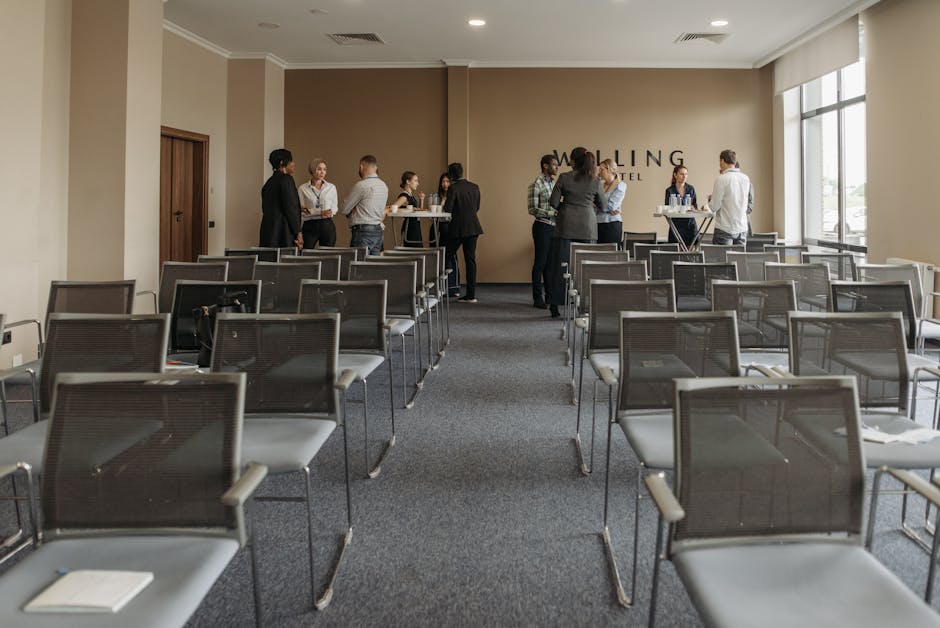
How to Make Every Employee Feel Included
Seating and Accessibility in a Standing Layout
Spread some seating through the room and near the food, and set up a quieter corner away from the speakers. A lounge set works well there in a large room. Leave at least 36 inches between cocktail tables along the main path, the minimum the ADA sets for a wheelchair route.
The corporate event planning guide‘s accessibility section covers wheelchair access, restrooms and reserved seating. For speeches, captions or an interpreter help guests who are deaf or hard of hearing.
Choosing Inclusive Holiday Decor and Themes
Many companies call it a holiday or end-of-year party so everyone feels included. A winter or year-end theme, like silver and white or a new year countdown, works for a mixed team. Keep the decor away from any single religious holiday, and ask a few employees what they’d enjoy.
Activities People Can Opt Into
Pair one activity with plenty of open time to talk, and keep speeches and awards short and early. Choose games that work for mixed teams and non-drinkers, and make each one optional.
At a seated party, a separate game area or a photo booth lets people join in and breaks the ice. Our guides to choosing game rentals and getting people talking at a corporate event have more ideas.

Your Corporate Holiday Party Timeline
Ideally, start two to three months out. Starting later? Keep the same order and shorten the gaps.
| When | Milestone |
|---|---|
| Two months or more out | Set the date, guest list and budget |
| About six weeks out | Book the space, caterer and rentals |
| About four weeks out | Send invitations |
| About two weeks out | Confirm the headcount |
| The week of | Reconfirm deliveries |
| The day after | Wrap up |
Set the Date, Guest List and Budget
Two months or more out, get the budget approved, settle the invite list and poll the team on dates. Choose the office or a venue, and check it’s free on the dates you poll. Set the time of day, and name an organizer plus a backup.
Book the Space, Caterer and Rentals
About six weeks out, sign the venue contract or get building approval. Book the caterer, bar service and entertainment, and request a rental quote based on your planned layout. Write down each vendor’s final-count deadline.
Send Invitations and Collect Dietary Needs
About four weeks out, send invitations with the start and end time, location, plus-one policy, food and drinks provided, dress code and a contact. Set an RSVP deadline, with dietary and accessibility questions on the form.
Confirm the Headcount and Finalize the Layout
About two weeks out, remind non-responders, then give each vendor the final count by their deadline. Rerun the seating and event space calculators, sketch the floor plan and draft a run of show.
Reconfirm Deliveries and Walk Through the Day
The week of, match delivery and pickup times to building or venue access, and name who meets the truck. Print food labels, test the mic and playlist, and send guests a reminder with the end time and ride details.
Wrap Up After the Party
The day after, stack the rentals where the vendor expects them and settle the final invoices. Send a two-question feedback form, and leave notes for whoever plans the next party.
Finding Rentals for Your Company Holiday Party
A holiday party your team enjoys comes from planning around who’s coming, when they can come and what they need to feel welcome. Once you know your headcount, the room plan and the rental order follow from it.
Whether you’re furnishing an office or an empty venue, Reventals makes filling the room simple. Browse tables, chairs, linens and serving equipment including chafing dishes, send one rental request for all of it, and we’ll get it delivered for your party.