








Banquet Seating
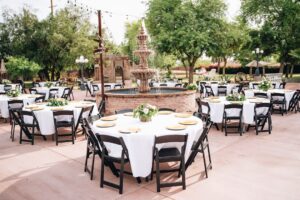
Banquet seating is one of the most popular event layouts and typically consists of guests seated around round tables for dining and socializing. This setup encourages conversation and creates a comfortable atmosphere for longer events where food and beverages are served. Banquet seating is commonly used for weddings, galas, award ceremonies, corporate dinners, fundraisers, and sports banquets.
Because banquet layouts include tables, chairs, and walking space for guests and servers, they require more room per person than some other seating styles. Regardless of whether you opt for 60″ or 72″ round tables, you should plan for at least 12 square feet per guest. To calculate the amount of space needed, use the following formula:
# of people × 12 square feet = space needed (in square feet)
For example, if you are hosting a sports banquet for 50 guests, you would calculate:
50 guests × 12 square feet = 600 square feet
This means you would need approximately 600 square feet of total event space for your banquet setup.
Conference Seating
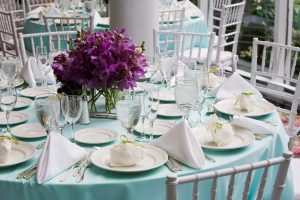
Conference seating is a setup in which guests are seated around one large table or a series of connected tables, designed for discussion and collaboration. This layout is ideal for meetings where communication and visibility between attendees are important. Conference seating is most commonly used for board meetings, executive discussions, team workshops, training sessions, and small corporate gatherings.
Because this arrangement prioritizes comfort, workspace, and movement around the table, it typically works best for groups of 24 people or fewer. Conference setups generally require about 40 square feet per person.
To calculate the amount of space needed, use the following formula:
# of people × 40 square feet = space needed (in square feet)

H-Square Seating
H-square seating is similar to a conference setup, but instead of one large table, four tables are arranged in a hollow square with an open space in the center. This layout allows all participants to face inward, making it easy for attendees to see and communicate with one another. H-square seating is commonly used for collaborative meetings, training sessions, workshops, committee discussions, and corporate presentations.
This arrangement works best for groups of approximately 10–52 people and provides a balance between visibility, interaction, and personal workspace. Because of the table layout and walking space required, H-square seating typically requires about 38.5 square feet per person.
To calculate the amount of space needed, use the following formula:
# of people × 38.5 square feet = space needed (in square feet)
U-Shape
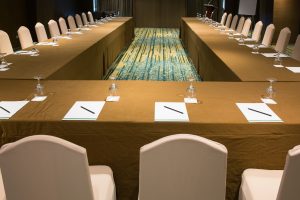
A U-shape seating arrangement is similar to an H-square setup but uses only three connected sides, creating an open area at the front or center of the room. This layout allows attendees to easily see one another while also maintaining a clear view of a speaker, presentation, or demonstration area. U-shape seating is commonly used for training sessions, workshops, classroom discussions, presentations, and collaborative business meetings.
Because this arrangement requires tables, chairs, and open space for visibility and movement, U-shape seating typically requires about 35 square feet per person.
To calculate the amount of space needed, use the following formula:
# of people × 35 square feet = space required (in square feet)
Reception Style
Reception-style seating is designed for social events where guests are primarily standing, mingling, and moving throughout the venue rather than remaining seated for long periods of time. This setup usually includes a limited number of cocktail tables, lounge furniture, or scattered seating areas instead of full dining tables and chairs. Reception layouts are commonly used for cocktail hours, networking events, holiday parties, trade shows, and casual wedding receptions.
Because guests are standing and circulating, reception-style events require significantly less space per person than seated arrangements. In most cases, you should plan for approximately 9.5 square feet per guest.
To calculate the amount of space needed, use the following formula:
# of people × 9.5 square feet = space needed (in square feet)
Classroom Style
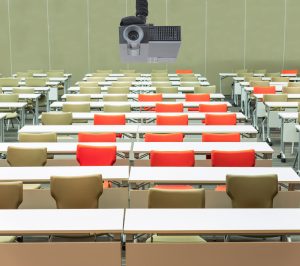
Classroom-style seating arranges guests at tables set in rows facing the front of the room, similar to a traditional classroom environment. This layout is ideal for events where attendees need space for note-taking, laptops, or training materials while maintaining focus on a speaker or presentation. Classroom seating is commonly used for seminars, training sessions, workshops, certification courses, and corporate presentations.
The amount of space required depends on the size of the tables being used. Smaller 18-inch tables allow for a more compact setup, while larger 30-inch tables provide additional workspace but require more square footage overall.
For classroom-style seating, plan for:
- 14.5 square feet per person with 18″ tables
17.5 square feet per person with 30″ tables
To calculate the total amount of space needed, use the following formulas:
# of people × 14.5 square feet = space required (with 18″ tables)
# of people × 17.5 square feet = space required (with 30″ tables)
Table/Chair
A table-and-chair setup is a flexible seating arrangement commonly used for small-group discussions, networking events, collaborative workshops, and casual classroom-style environments. Unlike traditional banquet or conference layouts, this setup often uses smaller individual tables spread throughout the room to encourage conversation and interaction among attendees.
Because this arrangement balances seating comfort with open movement space, you should plan for approximately 10 square feet per person.
To calculate the total amount of space needed, use the following formula:
# of people × 10 square feet = space required (in square feet)
Auditorium/Theater Seating
Auditorium or theater seating is designed to maximize audience capacity by arranging chairs in rows facing a stage, speaker, or presentation area. This setup is one of the most space-efficient seating arrangements because it eliminates the need for tables and minimizes unused floor space. Theater-style seating is commonly used for conferences, keynote presentations, lectures, performances, ceremonies, sporting events, and large group meetings.
Because this layout is optimized for audience viewing rather than dining or collaboration, you should plan for approximately 9 square feet per person.
To calculate the total amount of space needed, use the following formula:
# of people × 9 square feet = space required (in square feet)