


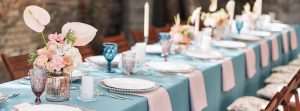


How do you set a Thanksgiving table that looks lovely and still fits everyone? You can have both with a little planning. In this blog, we’ll work out how many people your table seats, choose a layout for a bigger group, set up a kids’ table, and move the serving dishes off the table.
Then we’ll cover hosting in a smaller house, share a simple setting to start from, and finish with decor ideas that fit a full table. With a plan for every seat, you’ll be ready to host a warm, happy Thanksgiving!
- How Many People Fit at Your Thanksgiving Table
- Table Layouts for Seating a Bigger Thanksgiving Crowd
- How to Set Up a Kids’ Table for Thanksgiving
- Moving Serving Dishes Off the Dining Table
- How to Host Thanksgiving in a Small House
- A Simple Thanksgiving Table Setting
- Thanksgiving Table Decor Ideas for a Full Table
- Need More Seats for Thanksgiving Dinner?
How Many People Fit at Your Thanksgiving Table
Count your seats before you choose plates or a centerpiece. Once you have the number, you’ll know whether one table holds everyone, whether a second table is needed, and whether the kids get a table of their own.
A few days ahead, measure the table and the room, then set out the chairs, a few placemats, and your empty serving dishes for a dry run. You’ll see right away whether the food and the decor can share the table.
Elbow Room and Seats per Table
Common table-setting guidance allows 20 to 24 inches of table edge per place setting. Thanksgiving dinner comes with a lot of passing, so aim for the roomier 24 inches when you can. To find how many guests fit along one side, divide the table’s length in inches by the inches per guest.
An 8-foot table is 96 inches long, so at 24 inches per guest, you get 4 people per side and 8 around the table. An 8-foot table seats 8 to 10, and 8 is the maximum with formal place settings.
For any other table, the seating calculator does the math based on your guest count, meal style, chair style, and table shape. A few settings to keep in mind:
- Meal style: Pick casual for buffets and family-style meals.
- Chair style: Armchairs need more width per guest.
- Kids: Kids can usually fit a few more chairs than the recommended maximum.
If your count runs past your own table, renting a 6- or 8-foot rectangular table adds seats to match, right at the end of your dining table.
Walking Room Behind the Chairs
Measure from the table edge to the wall or the nearest furniture. Home dining guidance suggests at least 36 inches of clearance behind the chairs, and up to 54 inches next to a sideboard or a busy walkway. Check it during your dry run, with the chairs pulled out.
Save that wider gap for the path to the kitchen or the buffet, the side you’ll carry dishes along, and any doorway. If a sideboard you won’t use that day or an extra armchair is in the way, move it to a bedroom for the afternoon so it stays out of the hallway.
If a second table goes in the same room, our seating guide spaces rectangular tables 60 inches apart to leave room for chairs on both sides.

Table Layouts for Seating a Bigger Thanksgiving Crowd
When your seat count runs past the dining table, these four layouts keep everyone at one table or close to it. The right choice depends on your room’s shape.
Two Tables Joined Under One Long Linen
The simplest extension is to push a second table against the end of your dining table. Compare their height and width first.
Standard banquet tables are 30 inches high, and many home dining tables run 29 to 32 inches, so the two usually differ by only an inch or two. Measure both anyway, since even a small step shows under a runner and can tip a glass at the seam.
Width usually differs more. A 6- or 8-foot banquet table is 30 inches wide, and a common home dining table is 36 inches across, leaving a 3-inch step on each side when centered. Center the narrower table at the far end, and let the step mark where the kids or overflow guests sit.
Give each table its own cloth, overlap them at the seam, then lay a runner down the full length so the join disappears. Here’s how that works for a few common setups:
- One banquet table: A 60 x 120 cloth fits a 6- or 8-foot banquet table at lap length.
- Two 6-foot tables end to end: Two 60 x 120 cloths overlapped in the middle cover the pair.
- Mixed tables: The tablecloth calculator puts every table on one cloth list.
Line up the seam between two place settings so no plate sits on it, and set salt and pepper at each end. Renting the linens and runner is an easy upgrade, since they arrive cleaned and pressed and make the pair read as one table.
An L-Shaped or U-Shaped Table
An L shape puts a second table at a right angle to the dining table, running into the living room or along a wall. It suits a square room or an open plan.
A U shape uses 3 tables, with everyone facing in and the host at the closed end. It suits a big family, since one very long straight table puts the two ends out of earshot.
An inside corner, where chairs meet, can cost you a seat, so plan your count from the dry run. Each table keeps its own cloth, and a runner can turn the corner or stop at it. Run the centerpiece along the straight stretches, keep the corners free for gravy and butter, and serve from the open end of the U or the outer side of the L.
One Long Table Through a Doorway
If your dining room opens into a family room through a wide cased opening or a slider, and both rooms are on the same level, one long table can run straight through.
Measure the opening first. It has to fit the table plus a chair on each side, with a threshold flat enough that no chair wobbles. If anyone would have to cross the table to reach the kitchen, shift it so that path stays open.
The doorway seats suit adults who won’t mind a draft or a step, so keep older guests on the dining-room side. Running the table out onto a patio suits hosts in warm climates; elsewhere, keep it indoors.
A Bench Along One Side
A bench, like a piano bench or a garden bench brought inside, fits more people along one side, since there are no chair arms or gaps and kids can squeeze in together.
Benches suit kids, teenagers, and flexible adults. Anyone who needs a back for a long meal, including most older guests, will be happier in a chair. Padding helps on the chair side: resin and wood chairs usually come with a cushion, and banquet chairs are padded for long sits, as our guide to rental chair types explains.
Add a cushion or folded throw, and space the settings to match the chair side. Getting out mid-meal means everyone beside you shifts, so seat the people who’ll stay put.

How to Set Up a Kids’ Table for Thanksgiving
A kids’ table makes sense when the main table can’t take every child, or a run of young cousins wants to sit together. Set it with care, place it close and give the kids something to do.
Setting the Kids’ Table Like the Grown-Up Table
Use the same cloth color or runner as the main table, the same napkins and a place card at every seat, so the kids can see their table counts too.
Choose sturdy plates and wide-based cups that won’t tip easily. A small centerpiece they can touch, like mini pumpkins or clementines, keeps hands busy.
Pick the table height by age. Young kids are most comfortable at a kid-height table, older kids do fine at a card table, and teenagers often want a seat with the adults. Our tablecloth guide covers card-table cloth sizes. Renting a children’s table and folding chairs is a quick way to give little ones a table their size.
Where to Put the Kids’ Table
You have three good spots:
- At the end of the main table: set as a T or a step-down, it keeps kids close and in their parents’ view.
- A separate table in the same room: kids get their own space and still hear the toasts.
- The next room: it’s the quietest spot and frees up the most space, though the kids are out of sight.
Parents of young kids will want a clear view of the kids’ table, plus an open path for an adult to refill plates.
Something to Do Between Courses
Roll kraft or butcher paper over the table as the cloth, set out a cup of crayons, and the table cover becomes the activity. Add a short printable at each seat, like a turkey to color or a “what I’m thankful for” line. Older kids can take a job: carrying the rolls, handing out place cards or refilling water. Use battery candles, or none, on the kids’ table.

Moving Serving Dishes Off the Dining Table
A full Thanksgiving menu and a full table need the same surface, so moving the food frees the table for plates, glasses, and a centerpiece.
A Buffet on the Counter or a Side Table
From least effort to most, you can set the food out on:
- The kitchen counter or island
- A sideboard or console
- A folding table along a wall
Put the plates first, then the turkey, sides, gravy and rolls; cutlery and napkins wait at each seat. Carve in the kitchen and bring the turkey out on a platter. Keep the buffet clear of the path from the kitchen to the table, so nobody carrying a hot dish weaves through guests.
For a folding buffet table, count the dishes you’ll keep hot. Three full-size chafing dishes typically fit side by side on a 6-foot table, and four fit on an 8-foot table, which uses most of its length. Save a spot on the counter beside it for the stack of plates, the turkey platter, and the gravy. A floor-length cloth hides the legs and anything stored underneath. When the counter is full, renting a 6 or 8 foot rectangular table gives the food its own spot.
What Stays on the Table
Leave out the things people reach for mid-meal: gravy, butter, salt and pepper, cranberry sauce and a water pitcher. On a long or joined table, set salt and pepper at each end and double up the gravy boat and butter dish, so nobody has to pass them the length of the table. For seconds, guests can walk back to the buffet, or you can do one lap with the turkey platter.
Keeping the Food Warm Away From the Table
Don’t leave perishable food out at room temperature on a buffet table for more than 2 hours unless you’re keeping it hot or cold. If dinner and seconds run longer than that, keep the turkey and sides on heat or swap in fresh trays.
A low oven holds dishes between rounds, and slow cookers keep sides and gravy warm. For a big spread, chafing dishes keep food warm on the buffet, but they won’t heat cold food, so add dishes hot. Our chafing dish FAQ covers how they work, and renting a few keeps the sides warm through second helpings.
When the meal winds down, move the leftovers into the fridge before the pie comes out.

How to Host Thanksgiving in a Small House
A small dining room, or none at all, still works for Thanksgiving with a few moves:
- Clear the room: take out anything you won’t use that day.
- Turn the table: in a square room, setting the table on the diagonal can free up space at the ends.
- Serve from the kitchen: the table then only holds plates, glasses and a small centerpiece.
- Use two rooms: seat the adults at the dining table and put the kids’ table in the next room.
- Spread out the courses: serve appetizers and dessert in the living room, so the table turns over once.
- Set up the night before: set the table and do the dry run with chairs, and the morning stays free for cooking.
To see whether your group fits in a room, the event space calculator converts a guest count into square footage, or a room size into a guest count. Its banquet seating setup allows 12 square feet per guest.
A Simple Thanksgiving Table Setting
For an easy, casual setting, stack the salad plate on the dinner plate, with the forks on the left and the knife and spoon on the right. Place water and wine glasses at the upper right, and set the napkin on the plate or under the forks. A bread plate and a third glass make it formal, and they take up more of each guest’s table width. Our guide on how to set a table walks through both versions step by step.
Thanksgiving Table Decor Ideas for a Full Table
On a table set for a crowd, the decor runs down the middle of the table and sits at each place. Height and reach decide which ideas fit.
A Fall Color Palette From Three Shades
Pick three colors: one neutral base, like white, cream, or natural linen, and two fall accents, like rust and deep green, plum and mustard, or burgundy and gold. Put the base on the cloth or runner, one accent on the napkins and the other on the candles or flowers.
A tight palette makes a crowded table look planned, even when the plates, chairs or tables don’t match, which helps most on a joined table. Start with what you already own: let your dishes set the palette, then pick two accents to go with them. For more on pairing a neutral base with bold accents, see the color tips in our table setting guide.
Low Centerpieces Guests Can See Over
Keep centerpieces below eye level, or under 12 inches tall. At a long Thanksgiving table, people talk across and on the diagonal, so a tall arrangement blocks more than one conversation.
Build a runner-style centerpiece down the table: a strip of greenery with small pumpkins, pears and votives. Break it into a few short clusters so the gravy boat and butter dish can slide in between. If you want height, go slim and tall, like a single branch in a bud vase, which keeps the view open.
On the 30-inch banquet section of a joined table, there’s less room on either side of the centerpiece, so keep the greenery slim there.
Leaves, Branches and Fruit From the Season
Fall leaves, magnolia or eucalyptus branches, wheat, small pumpkins and gourds, pears, pomegranates, clementines, and nuts in the shell all make easy table decor. Lay them down the middle of the table, set one at each place or tuck them around the base of the candles.
Wipe and dry anything you bring in from the yard, and keep loose leaves well away from candle flames. Leave strongly scented flowers off the dinner table so they don’t compete with the food. After dinner, the pears and clementines become the snack bowl.
Candlelight Without the Reach-Over
Low votives in glass holders down the middle of the table give you candlelight that sits below all the passing. If you love tapers, set them in heavy holders, away from the spots where dishes travel. Battery candles work at the kids’ table and anywhere close to a reach. Choose unscented candles so they don’t compete with dinner, and light them once the plates are down. Moving the serving dishes to a buffet leaves more room for candles.
Use Place Cards to Plan the Seating
At a big table, place cards double as your seating plan. They end the hover at the doorway and let you pair up or split up guests on purpose.
Put older guests on the side that’s easiest to reach, yourself near the kitchen and flexible guests at the doorway or bench seats. Make cards for the kids’ table too. For the cards themselves, write names on a small tag tied to a pear, a leaf, a wood slice, a mini pumpkin or a cookie. Write them the day before and lay them out during your dry run, so any swaps happen before guests arrive.
Herb-Tied Napkins at Each Seat
Tie each cloth napkin with twine or ribbon around a sprig of rosemary, sage or thyme, and lay it on the plate. It adds a little fragrance without taking up any table width. Match the ribbon to your palette, or alternate 2 napkin colors down a long table. Tie them the night before, and keep the herbs fresh in a damp towel.
Mixing Dishes and Glassware From More Than One Household
When plates and glasses come from more than one household, mix them on purpose: alternate patterns down the table, or give each table in a joined layout its own. The palette, napkins, and runner tie it together.
For glasses, use one shape per table section, or colored glass at every seat. Goblets work for both water and wine, as our glassware guide notes, so they’re an easy pick for a whole section.
Count plates, glasses, and flatware per guest before the day. A casual setting uses 2 glasses per guest and a formal one uses 3. Sort out any shortfall by having households bring pieces early in the week. Renting matching plates or glasses for the overflow table is another easy way to fill the gap.
Need More Seats for Thanksgiving Dinner?
A Thanksgiving table that seats everyone starts with counting seats and choosing a layout. Once there’s room for everyone, the decor is the fun part.
When the guest list outgrows your dining table, Reventals makes it simple to add extra tables, chairs, and linens. Browse your options, submit your rental request in one place, and have it delivered for dinner.