

Northern Virginia and DC run on four seasons and a Beltway that connects two very different event markets. This guide covers what most planners miss here: a political calendar that shifts vendor demand every two to four years, DC’s cherry blossom and July 4th crowds, and how DC proper differs from Northern Virginia’s suburbs and wine country.
You’ll also find booking lead time recommendations and travel guidance for booking an event in this region.
- The Government Calendar Shapes Everything
- DC’s Annual Event Calendar
- Weather and Timing Beyond Cherry Blossom Season
- DC Proper and Northern Virginia: The Difference
- Venues in Northern Virginia & DC
- Booking Lead Times in Northern Virginia and DC
- Venue Location and Guest Travel Time in DC and Northern Virginia
- Permits and Regulations in Northern Virginia-DC
- Need Party Rentals in Northern Virginia?
The Government Calendar Shapes Everything
In most cities, you’re planning around weather and local festivals. Here, you also have to plan around Congress and the White House.
Election Years and Inauguration Years
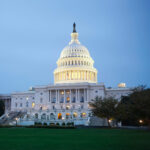
Every four years, Washington hosts a presidential inauguration in January, and the local data on this market is blunt about what that means: massive event demand across the region. Hotels fill with inaugural balls, congressional delegations, and out-of-town guests. Venues that are easy to book at any other time of year get snapped up months in advance, and vendors who normally work weddings and galas find themselves booked for inaugural events, too.
You can check this cycle years ahead, since it runs like clockwork: 2025, 2029, 2033, and beyond. If your event happens to land in January of an inauguration year, plan a full year out instead of the usual few months, and confirm your venue’s cancellation policy in case a last-minute government event bumps your booking. Election years, more broadly, even without an inauguration, also shift the calendar, since campaign events and fundraisers compete for the same venues and caterers everyone else wants.

DC’s Annual Event Calendar
DC runs on a calendar of recurring events that reshape the whole region’s hotel and venue availability, whether or not your event has anything to do with them.
Cherry Blossom Season (Late March–Mid-April)
The National Cherry Blossom Festival runs roughly three to four weeks, late March through mid-April, and draws more than 1.5 million visitors to the region. That’s not just a National Mall crowd problem. Hotels citywide fill up, restaurants book out for private events, and venues anywhere in the DC area feel the ripple effect, not just the ones close to the Tidal Basin.
This window also happens to be one of the prettiest stretches of the year here, 60 to 80°F and undeniably scenic, which is exactly why so many people try to plan weddings and galas around it. If your date falls in this window, book six months to a year out rather than the two or three months that might work fine in a quieter month. An experienced local planner also builds in extra travel time for guests, since Cherry Blossom season traffic and Metro crowding around the Tidal Basin can slow anyone staying nearby.

Weather and Timing Beyond Cherry Blossom Season
Cherry blossom season gets its own section above because it’s this market’s single biggest annual draw, but the rest of the year still needs real planning around the weather.
Summer (June through August) is hot and heavy with humidity, with the heat index regularly running 88 to 95°F and July and August feeling especially oppressive. If your event is outdoors in summer, push it to evening, add a tent wherever people will actually stand, and don’t skip the beverage stations.
Fall (September and October) is the best all-around outdoor window this region gets: 65 to 80°F, dry, and comfortable for a full day outside. If your date is flexible, this is where to put it.
Winter (November through March) runs cold, 35 to 50°F, with occasional snow, and outdoor events stop making sense for most of it. On top of the cold itself, Nor’easters can hit the region anywhere from October through April, a separate risk from summer heat and worth its own backup plan. If your date falls in that window, keep a firm indoor backup and don’t assume a clear forecast a week out is a guarantee.
July 4th on the National Mall
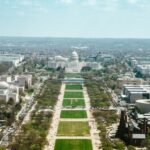
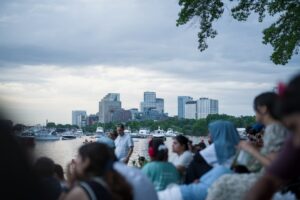
Every July 4th, DC hosts the National Independence Day Parade along Constitution Avenue between 7th and 17th Street NW, the free “A Capitol Fourth” concert, and fireworks on the National Mall. If you’re hosting anything downtown that day, expect real road closures well beyond the parade route itself and Metro stations that get packed hours before the fireworks even start.
The practical move is simple: if your event is anywhere near downtown on July 4th, build in significant extra travel time for guests, and consider whether an evening event that day is worth competing with fireworks traffic at all. Plenty of DC-area hosts choose to schedule around this date entirely rather than fight it.

DC Proper and Northern Virginia: The Difference
DC proper and Northern Virginia are often treated as one blended metro. Here, there are two distinct event markets, each with its own event culture, venue types, and planning considerations.
Washington, DC Proper
DC has more international residents than almost any US city outside New York, and that shows up directly in its event culture. Embassy and diplomatic events are a real, recurring part of this market, and if you’re working with international clients or a diplomatic community, expect more formality around protocol, seating, and guest lists than at a typical private event.
Military event culture runs just as deep here, tied to the Pentagon, Joint Base Andrews, Fort Belvoir, and Quantico. Events connected to any of these communities often come with real protocol and formality expectations, things like rank-based seating or ceremonial elements, that a planner unfamiliar with military tradition can easily miss. Clean, high-quality tables, linens, and chairs are especially important for this crowd.
Northern Virginia
Cross the river into Fairfax, Arlington, or Alexandria, and the event culture shifts from DC’s political and diplomatic scene to a more suburban, family-oriented, and professional one. Corporate events here lean toward the government contracting, defense, and consulting industries that fill Tysons Corner and Reston’s office parks, while private events skew toward family milestones over embassy galas.
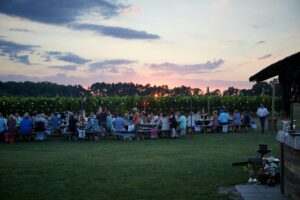
Loudoun County, often called “DC Wine Country,” is the region’s real growth story: more than 50 wineries within 45 minutes of DC, and a fast-growing premium event destination for weddings and corporate retreats alike. Further out, Virginia Hunt Country around Middleburg and Upperville brings a different flavor again, with equestrian and estate venues built around the area’s horse-country history. If your event calls for a more relaxed, scenic setting than DC proper offers, this side of the market is where to look.
Venues in Northern Virginia & DC
Northern Virginia and DC’s venue scene splits cleanly along the line covered above. On the DC side, Longview Gallery, Meridian House, and District Winery each represent a different flavor of the city’s historic-mansion-meets-industrial-loft real estate. On the Northern Virginia side, the region’s venues lean toward Loudoun County’s wine country and Virginia Hunt Country around Middleburg and Upperville, estate and equestrian spaces built for a more relaxed, scenic event than an urban gallery space.
Booking Lead Times in Northern Virginia and DC
Outside of this region’s peak windows, a normal lead time works fine for most vendors and venues here. Inside them, books meaningfully earlier than you would almost anywhere else.
Cherry blossom season (April and May, covered above) and fall gala season (September and October, the region’s best outdoor weather and peak wedding time) are the two biggest recurring crunches. Both call for booking six months to a year out, rather than the two or three months that might work during a quieter stretch. June layers graduation season, thanks to the region’s large number of universities, on top of Pride Month events, so expect competition for venues and caterers even outside the usual wedding season. December fills up fast, too, with government and corporate holiday parties competing for the same ballrooms and caterers.
If your event lands in January of an inauguration year, the usual advice to book six months out doesn’t go far enough. Start closer to a year ahead, and build extra flexibility into your plan in case a government event needs the same block of hotel rooms you were counting on.
Venue Location and Guest Travel Time in DC and Northern Virginia
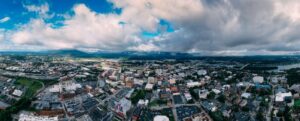
The DC metro area is home to about 6.4 million people across three distinct sub-markets: DC proper, the Northern Virginia suburbs, and Virginia’s wine and hunt country farther out. Where you set your venue changes who can actually get there easily.
A DC-proper venue like Longview Gallery or District Winery sits in the walkable, Metro-accessible urban core, which means guests without cars can get there on their own. Head out to Loudoun County wine country and that changes: even the closest wineries are 45 minutes from DC, and Virginia Hunt Country around Middleburg and Upperville is further out still, over an hour for guests coming from the city. That’s a meaningfully bigger commitment for your guest list than an in-town venue, not just a longer drive.
An experienced planner handles this differently depending on which side of the river the venue sits and how far out it is. For a wine-country or hunt-country venue, that usually means arranging a shuttle from a central pickup point, blocking rooms at a nearby hotel so guests aren’t driving home late, and building a later start time into the invitation so people aren’t rushing straight from work. It’s also worth asking the venue directly whether it provides its own covered space, since a lot of Virginia’s wine-country and estate venues are set up for outdoor ceremonies and receptions without a permanent structure.
Renting a tent for the reception space solves that gap and gives you a weather backup no rural venue can guarantee on its own. For outdoor seating areas, renting chairs and tables ensures you have everything you need regardless of what the venue provides.
Permits and Regulations in Northern Virginia-DC
This market runs on multiple permitting authorities, not one office you can call and be done. DC proper, DC’s own park system, and Virginia each handle events differently, so check which one applies before assuming your venue has it covered.
National Mall and National Park Service Land
Any event on or near the National Mall falls under National Park Service (NPS) permitting, and it’s extremely competitive and restricted. NPS also manages other event-worthy land in this market, including Rock Creek Park and Great Falls Park, so this isn’t just a National Mall issue. If your event has any hope of landing on NPS land, start the permit conversation far earlier than you would for a typical park reservation, and have a backup venue in mind in case the date or location doesn’t come through.
DC Department of Parks and Recreation
Separate from NPS land, DC’s own city parks run through the DC Department of Parks and Recreation, which requires a permit for any gathering over 25 people. A small get-together might not need one, but anything larger does, so check your guest count against that line before assuming a DC park is free to use.
Virginia State Parks
Cross into Northern Virginia and the parks authority changes entirely: a Virginia state park venue requires a permit through the Virginia Department of Conservation and Recreation (VDCR), a different agency altogether from DC’s parks department. If your event season spans both sides of the market, that means tracking two separate permit processes, not one.
Alcohol Licensing on the Virginia Side
Planning to serve alcohol at a Northern Virginia event? Virginia ABC (Alcoholic Beverage Control) requires a temporary license for it. Secure this well ahead of your date, since it’s not something to sort out at the last minute once a caterer or venue is already booked.
DC Noise Ordinance and Tent Permits
DC’s noise ordinance is genuinely complex and depends on which Advisory Neighborhood Commission (ANC) your venue is in, so the rules can differ from block to block. Confirm local noise limits directly with your venue rather than assuming a single citywide standard applies.
Larger outdoor tented events also need a tent permit, through DC DCRA on the DC side or the relevant local building department on the Northern Virginia side. Exact size thresholds vary by jurisdiction, so confirm the specific square-footage trigger with the local office directly before you book.

Need Party Rentals in Northern Virginia?
Northern Virginia and DC ask more of a planner than most metro areas: a political calendar that shifts every two to four years, two distinctly different markets under one metro name, and real weather and travel logistics on top of it all. Check your date against the political and event calendars above, be honest about which side of the market best fits your guest list, and start planning with Reventals today to bring the rest of your event together in Northern Virginia and DC.
Whether you need chairs, tables, or linens, Reventals has everything you need to make your Northern Virginia or DC event a success.