







Choosing a wedding venue in San Francisco comes down to matching a room’s character and capacity to your guest list, not to whichever space looks best in a photo gallery. This guide to wedding venues in San Francisco, CA compares eight venues across the city’s real neighborhood clusters: historic music halls, grand hotel and landmark ballrooms, and historic social clubs and mansions. One planning fact catches couples off guard here: San Francisco proper runs cool and foggy through June and July, the opposite of what “summer” usually means, so an outdoor-leaning venue booked for what feels like peak season can still need patio heaters.
- What to Decide Before You Tour San Francisco Venues
- Historic Music Halls
- Grand Hotel and Landmark Ballrooms
- Historic Social Clubs and Mansions
- Palace of Fine Arts
- What You’ll Still Need to Rent for a San Francisco Wedding
- Conclusion
What to Decide Before You Tour San Francisco Venues
Two decisions shape which San Francisco venue fits your wedding, and both come up before you compare a single room capacity. Settle them first and the venue details below turn into answers.
San Francisco’s Microclimate — Why You Need a Heater Even in “Summer”
San Francisco averages 55 to 65 degrees year-round, and June through August is often its coldest, foggiest stretch. Locals call the fog rolling through the Golden Gate “Karl the Fog,” and it shows up most reliably in the months couples assume are safest for an outdoor wedding. Book a courtyard venue for a July date expecting warm evening light, and you may get guests reaching for jackets at cocktail hour instead.
September and October are San Francisco’s real second summer: the warmest, sunniest stretch of the year and the city’s actual peak wedding season. If your date falls outside those two months, or your venue has any outdoor component at all, plan for patio heaters regardless of what the calendar says. Renting them is standard practice here even in August.
For a deeper look at permits and seasonal timing across the city, San Francisco’s party planning guide walks through the broader event calendar beyond weddings.
What’s Actually Included — Most SF Venues Rent Bare Space
Most San Francisco wedding venues rent you the room itself and nothing else. Seating, linens, and a dance floor are usually separate line items, and that gap isn’t obvious from a venue’s photos or its price quote. Swedish American Hall and Verdi Club both build tables and chairs into the rental; the Palace of Fine Arts Rotunda provides no furniture at all. Most venues land between those two.
Ask what’s included in the base rental fee at every venue you tour, then price the difference separately, because Bay Area rental costs run among the highest in the country. A venue that looks like the better deal on paper can cost more once you add chairs, linens, and a dance floor a competing venue already had built in.
Historic Music Halls
Tour San Francisco’s historic halls first if a built-in stage, a professional sound system, and music-venue history matter more to you than a hotel ballroom. Rooms designed for performance handle sound, load-in, and vendor access differently from a banquet space, usually in your favor if you’re hiring a live band. Ask about elevator access early if your caterer needs it.
Swedish American Hall
If your guest list lands between 150 and 220 for a seated dinner, Swedish American Hall covers it with a two-room setup and no third booking. Freja Hall, the main room at 2174 Market Street in the Castro, has a raised stage, built-in A/V, and a mezzanine, and every Freja rental automatically includes Balder Hall next door as a lounge, bar, or overflow seating area.
Watch the seated numbers, because the venue’s headline figure isn’t one. Freja seats 150 for a banquet dinner and Balder seats 70, so 220 is your ceiling for the two rooms together. Reaching 300 seated means adding Café du Nord downstairs, a former speakeasy that seats 80, and the advertised 650 is a standing total across all three spaces.
A full 10-hour rental includes ten 60-inch rounds, six 8-foot tables, and 200 wood folding chairs, covering furniture for roughly 150 guests. Get two things in writing before you sign. The venue’s wedding page lists basic linens as included while its own capacity-and-specs page says no linens are provided and to order them through your rental company, and furniture setup can add a $250-plus-tax labor charge. Swedish American Hall publishes no rental rate, so ask for a full quote early, and price out Meadow Events, its exclusive caterer, at the same time. You can’t bring in your own.
Tour Freja and Balder together before deciding whether Café du Nord earns a place in the contract. Under 220 seated guests it doesn’t, and leaving it out keeps your cost and coordination simpler.
Broadway Studios
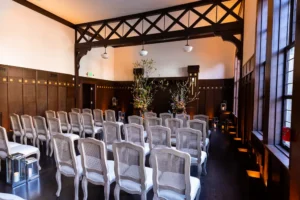
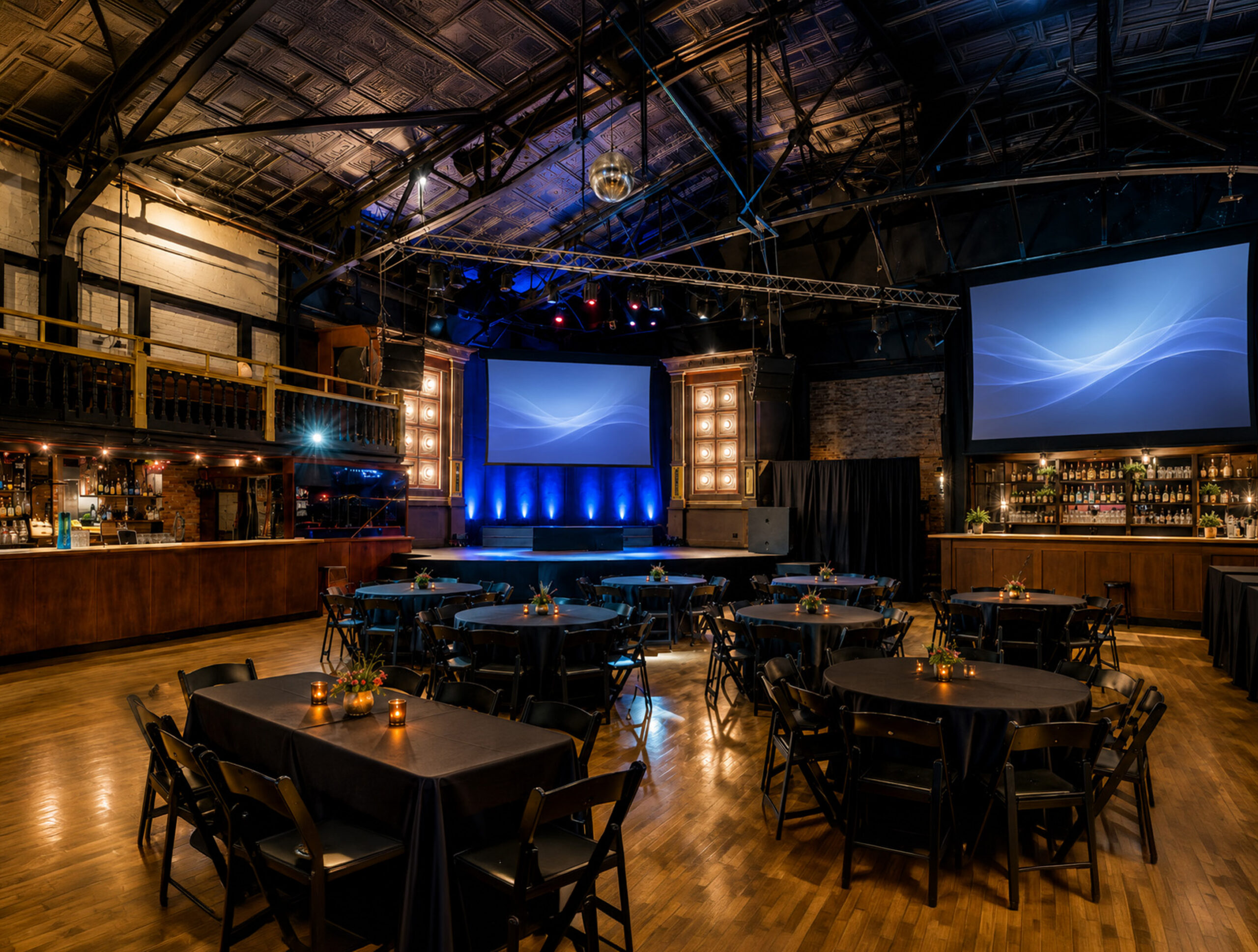
A wraparound balcony gives you a second vantage point over your own reception, and few San Francisco rooms this size offer one. Broadway Studios, the upstairs venue at 435 Broadway where North Beach, Jackson Square, and Chinatown meet, has run events for more than 30 years across 8,000 square feet, with a large stage, two bars, a green room, a coat check, and a commercial kitchen.
Capacity confirms at 450 standing or 300 seated for a banquet dinner. Get those numbers in writing from the venue, since third-party listings quote a much wider range for this address. Catering is your call here, either your own caterer or the venue’s menus, unusual among historic San Francisco halls where one exclusive partner is the norm.
Plan guest transportation yourself. North Beach street parking is limited and metered most weekend evenings, Broadway becomes a busy nightlife strip after dark, and the venue’s own site lists no parking or valet service of any kind. If more than a handful of guests plan to drive, price a garage or a shuttle into your budget. Broadway Studios publishes no pricing either; every request routes to a private-event quote. Ask for one that includes staffing and bar service before comparing it against a venue with a flat rental fee.
Grand Hotel and Landmark Ballrooms
Full-service scale changes how much you have to manage yourself. An in-house events team absorbs catering, staffing, and setup that you’d otherwise coordinate across three or four vendors, and rooms at this size hold several hundred guests without splitting your reception across floors. The tradeoff is a service fee and a food-and-beverage minimum you won’t run into at a historic hall.
Fairmont San Francisco
Half your guest list flying in? A hotel wedding solves your guest-lodging problem and your venue problem in a single conversation. The Fairmont San Francisco, at 950 Mason Street on Nob Hill, puts its 11,362-square-foot Grand Ballroom in the same building where your out-of-town guests will sleep. That room seats 970 for a banquet dinner and holds up to 2,300 standing.
The 1,764-square-foot Grand Ballroom Lounge sits just off the main room and seats 100, a natural fit for cocktail hour or a rehearsal dinner the night before.
Hotel-level service comes with a hotel-level price tag: properties like this carry service fees and catering minimums that historic halls and social clubs don’t, and the Fairmont quotes both through its events team instead of publishing rates. Ask about guest-room block rates and reservation deadlines in that same conversation, since the hotel handles those separately from the ballroom contract. Then pin down which configuration your quoted capacity refers to, because the same room seats far fewer for a plated dinner than it holds for a cocktail reception.
Julia Morgan Ballroom
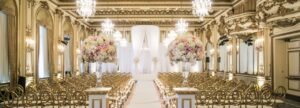
Keeping guests in one room from cocktail hour through the last dance is the fastest way to make a wedding feel static. Julia Morgan Ballroom fixes that with three connected spaces across the entire 15th floor of the Merchants Exchange Building at 465 California Street in the Financial District, skyline views included. Architect Julia Morgan designed the main room, which seats 320 for a banquet dinner or holds 750 standing across 4,060 square feet under 17-foot ceilings.
The two adjoining rooms earn their place on your timeline. The Daniel Burnham Bar & Lounge (1,050 square feet, up to 255 standing) handles cocktail hour before guests move into the ballroom, and the Friendship Foyer (555 square feet) holds 100 more for overflow. Put cocktail hour in one and dinner in the other, and a room change is built into your night.
The venue owns and operates its own kitchen and food and beverage service, so ask whether outside catering is permitted at all before you collect caterer quotes. Julia Morgan Ballroom publishes no pricing either; the pricing link on its own site routes to an inquiry form. Your budget here rides almost entirely on its in-house food-and-beverage minimum. Get that number on your first call; it decides whether a Financial District landmark is in range for you.
Historic Social Clubs and Mansions
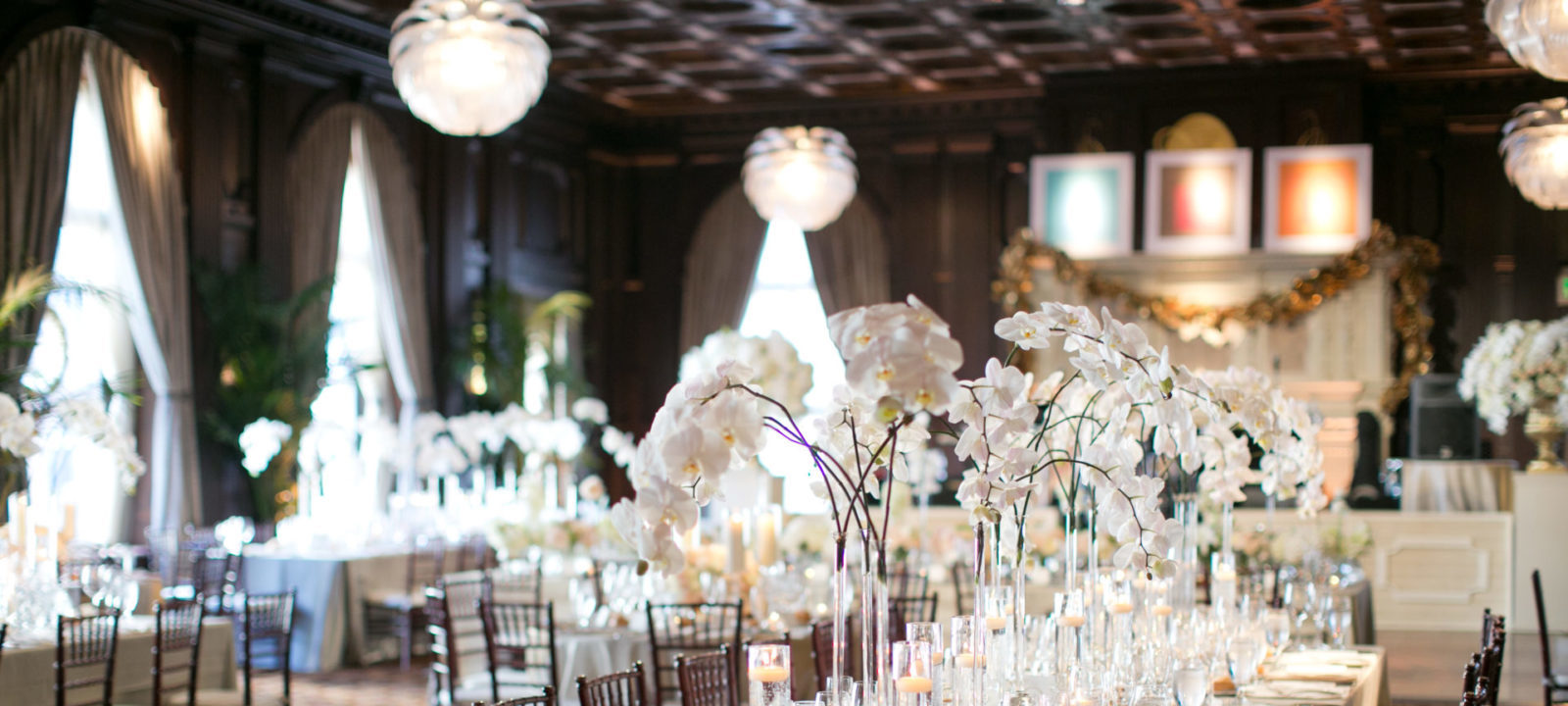
Character costs capacity. San Francisco’s social clubs and mansions top out under 300 guests for a seated dinner, and what you get in exchange is turn-of-the-century architecture, smaller rooms with genuine history, and rental terms set by a membership club or a nonprofit instead of a hospitality company. Take this route if your guest list is modest and the building itself is part of why you’re getting married there.
The Regency Center
Settle your guest count before you tour the Regency Center, because one 1909 building holds three separate venues and the wrong one will feel either cramped or half-empty. Built as a Scottish Rite Temple at Van Ness Avenue and Sutter Street in lower Nob Hill, the complex mixes Gothic, Neoclassical, and Beaux-Arts architecture across three independently bookable rooms.
The Lodge is the smallest at 2,925 square feet, seating 240 for a banquet dinner under 35-foot carved wood ceilings and stained glass. Social Hall SF seats 350 across 5,700 square feet in a cleaner, more modern room. The Regency Ballroom is the largest, seating 450 across 6,600 square feet with a horseshoe balcony, 22 teardrop chandeliers, and a 1,400-guest maximum. All three together run 15,225 square feet and hold 2,300.
Tour at least two of the three before you book, because the right pick depends on whether your guest list is closer to 150 or closer to 400, not on which room is open on your date. Pricing comes only through the venue’s director of sales, with nothing published, so request quotes on two rooms at once and compare them side by side. Catering policy can vary by level in a building this size, so get it in writing for the room you choose.
Verdi Club
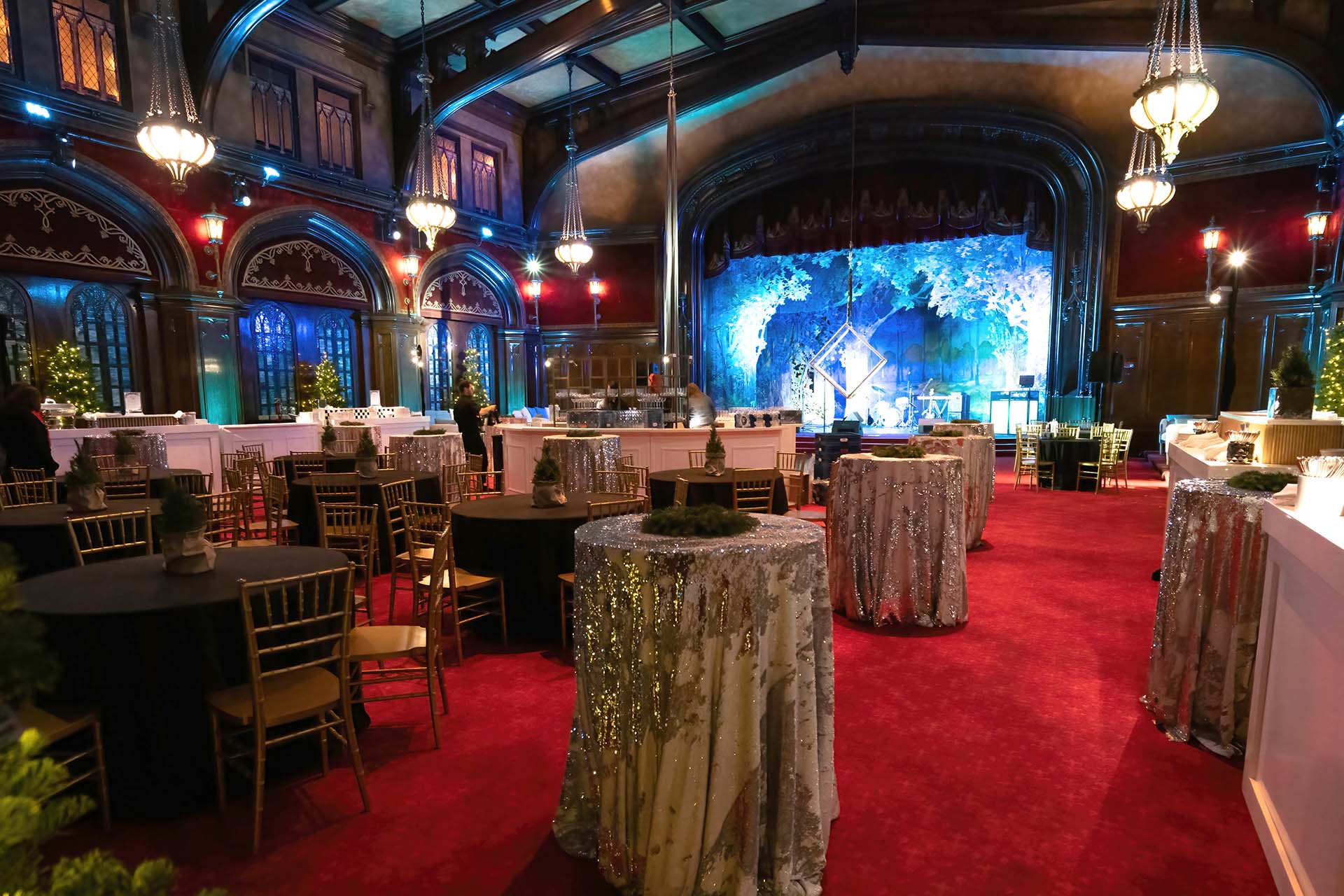
Verdi Club‘s capacity drops by more than 100 guests the moment you add a seated dinner: 299 for a reception without dining, 185 with a full meal. Lock in your headcount early, because that swing decides whether the room fits your format at all.
The Mission District club has hosted events since 1916, when it opened for the neighborhood’s Italian American community, and the Art Deco building still carries that history through its 2,500-square-foot ballroom and 400-square-foot lounge.
Tables, chairs, bar staff, an on-site manager, event planning support, and post-event cleaning all come with the rental, which shortens the vendor list you manage. In-house catering is the default, though outside caterers are allowed with prior approval and a fee. Verdi Club quotes rental rates on request, but two published fees are easy to miss: a $750 ceremony fee covering setup and cleanup, and a $10-per-bottle corkage if you bring your own wine or champagne. Outside beer and liquor aren’t permitted.
James Leary Flood Mansion
Planning a late-night send-off? Cross the Flood Mansion off your list now. Guests must be out by 10:30 p.m. Friday and Saturday and 9:30 p.m. Sunday through Thursday, vendors get 90 minutes after that to load out, and the building only hosts events after school hours and on weekends because it operates as an independent school the rest of the time.
What that constraint buys you is Pacific Heights: more than 6,000 square feet of event space and a Grand Hall running the length of the building with bay views the entire way. Capacity is 165 for a seated dinner or 299 for a cocktail reception, plus 200 standing in the courtyard. The rental fee starts at $14,750, half of it plus a refundable damage deposit due to hold your date and the balance plus a certificate of insurance due a month out.
Catering runs through the mansion’s approved vendor list. Ask for that list on your first call and check whether your caterer is already on it, or budget the time it takes to get a new one approved.

Palace of Fine Arts
Your ceremony under the Palace of Fine Arts Rotunda will have an audience you didn’t invite. The domed colonnade built for the 1915 Panama-Pacific Exposition is the city’s most photographed wedding backdrop, and the park stays open to the public while a wedding permit is active. Count on tourists at the Rotunda whatever hour you book.
It’s a city-owned park landmark at Lyon Street and Marina Green Boulevard, not a private venue, so San Francisco Recreation and Parks handles the booking. Ceremony capacity is 250, under the Rotunda only. The reservation fee is $597, plus $171 an hour with a two-hour minimum, plus a refundable $500 cleaning and damage deposit. Applications open a year out, and if two couples want the same date the city awards it by randomized lottery, not first come, first served. Apply as early as your date allows and keep a backup ready.
Two rules change what you plan around, and neither bends. The Rotunda provides no chairs or tables, and amplified sound isn’t allowed on site. A string quartet or acoustic guitarist is fine; a DJ or a speaker system for your vows is not. Every chair, every ceremony arch, and any sound your guests need comes from a rental plan you build yourself, and you haul your own trash out of the park afterward.
A reception here is priced separately and steeply: a $5,000 minimum, a $1,000 refundable cleaning deposit, staffing at $96 an hour, and tents from $10,000 a day plus $5,000 for setup. For an indoor reception, the Palace of Fine Arts theater next door holds up to 5,000 and books through its private operator, Non Plus Ultra, not the parks department.
What You’ll Still Need to Rent for a San Francisco Wedding
The list below closes the gap between what your venue includes and what actually shows up on your wedding day.
Chiavari chairs are the standard choice wherever you aren’t using built-in seating, and they matter most at the Palace of Fine Arts Rotunda, which provides none. San Francisco-Oakland-San Jose’s rental inventory carries them in white, black, mahogany, and other finishes, so you can match your color scheme instead of settling for whatever a caterer has on hand.
Add a dance floor at any venue without one built in, particularly the historic social clubs and mansions never designed around one. Options run from a classic walnut finish to a lit LED floor.
Heaters tie back to the microclimate: book a courtyard, garden, or any outdoor-leaning space, and tent or portable patio heaters belong in your plan whatever month you’ve chosen.
Linens are the line item couples most often assume is covered when it isn’t; even a venue that includes tables and chairs may leave them to you. Renting also saves you storing, washing, and pressing your own.
Need Wedding Rentals in San Francisco?
With so many beautiful wedding venues in San Francisco, the right choice ultimately comes down to the setting, size, and experience you want for your celebration. Once you’ve found the one, Reventals can help with the rentals that bring it all together. From seating and linens to specialty pieces and event essentials, find what you need to create a wedding setup that feels uniquely yours.