







Planning skills are what separate a smooth, memorable event from one that feels chaotic behind the scenes. From managing timelines and budgets to communicating with vendors and solving last-minute problems, successful planners need a wide range of abilities to bring everything together.
In this guide, we’re breaking down the most important event planning skills you need for success, along with affordable, and in many cases free, resources to help you strengthen each one.
Whether you’re just starting out or looking to grow your experience, these 11 skills can help you plan with more confidence, stay organized under pressure, and create better events from start to finish.
- Event Design
- Vendor Coordination
- Layout Design
- Organization
- Communication
- Rental & Inventory Planning
- Problem Solving
- Attention to Detail
- Time Management
- Leadership
- Budget Management
Event Design
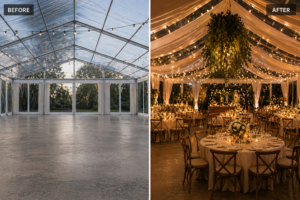
Event design starts with a vision and turns it into something tangible. That might mean selecting rentals that match a specific aesthetic, layering textures through linens and décor, or designing a layout that highlights key focal points, such as a stage or bar area.
This skill also requires balancing creativity with constraints. Budget, venue limitations, and available inventory all play a role in what’s possible. Experienced planners know how to adapt their vision based on these factors, which means finding alternatives that still achieve the desired outcome.
Over time, planners develop an eye for what works by studying real setups, experimenting with combinations, and understanding how color, spacing, and scale influence the overall experience.
Learn this skill:
Vendor Coordination
Event planners work with multiple vendors to bring an event together, including rental companies, caterers, venues, and décor suppliers. Vendor coordination is the skill that ensures all of those partners are aligned, informed, and working toward the same outcome.
This goes beyond simply booking vendors. Planners are responsible for confirming details, clarifying what’s included, and making sure each vendor understands how their role fits into the larger event.
This is also where planners advocate for their event. Whether it’s adjusting quantities based on guest count, confirming flexibility around timing, or ensuring expectations are clearly defined, strong coordination helps avoid misunderstandings and last-minute issues.
Over time, planners develop this skill by:
- Learning how different vendors operate and what they need to succeed
- Communicating changes clearly and early
- Building relationships with vendors they trust
- Keeping all details organized and accessible
When done well, vendor coordination creates a sense of alignment behind the scenes—so everything comes together smoothly on event day.
Learn this skill:
Layout Design
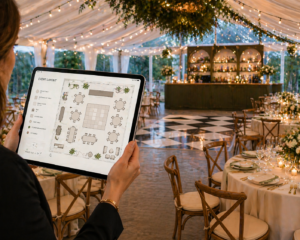
Layout design means planning how every element fits within a space. Tables, chairs, bars, buffets, dance floors, and décor all need to coexist without overcrowding or creating bottlenecks.
Guests should be able to move easily, staff should have room to work, and key areas should feel intentional rather than cramped or disconnected.
This is where many issues can arise. A layout that looks great on paper may not account for real-world spacing. Tables placed too close together can make service difficult. Insufficient walkways can disrupt guest flow. Misplaced focal points—like a stage or bar—can create congestion in high-traffic areas.
Strong layout design skills come from understanding both space and behavior.
Planners develop this by:
- Reviewing venue dimensions and constraints carefully
- Mapping out layouts with realistic spacing (not just maximum capacity)
- Thinking through how guests will move throughout the event
- Adjusting layouts based on event type, service style, and guest count
If you’re feeling overwhelmed by this skill, no need to worry! There are plenty of online tools available to help with layout planning that professional event planners use every day.
Many planners start with simple tools like Canva, then move to more advanced software as their events become more complex.
Tools planners use:
- Canva – quick, visual layout planning
- EventFloorPlanner – simple seating and event layouts
- Prismm – advanced 2D/3D event design
- OnePlan – map-based layouts for larger events
Learn this skill:
Organization
Event planning is, at its core, a logistics game. You’re managing timelines, coordinating vendors, tracking rentals, and making sure everything shows up in the right place at the right time.
Strong organizational skills are what keep all of those moving pieces aligned, especially when plans change.
In real events, this goes far beyond a simple checklist. You might be:
- Coordinating rental deliveries within a tight venue window
- Ensuring tables and linens arrive before florals are installed
- Timing the catering setup so it doesn’t interfere with the décor or guest arrival.
At the same time, you’re tracking changes in guest count that affect layout, seating, and inventory, and communicating those updates to multiple vendors.
The good news? Organization is a skill you can build. With the right systems in place, what once felt overwhelming becomes a repeatable process; that’s when event planning starts to feel less stressful and far more controlled.
Learn this skill:
Communication
Clear communication is what keeps an event running smoothly behind the scenes. You’re constantly coordinating with clients, vendors, venues, and your own team to ensure everyone is aligned on timelines, expectations, and responsibilities.
Event communication most often breaks down during handoffs. A rental company may offer a delivery window, but the venue may allow access only during certain hours. A client might approve a layout change without realizing it affects table counts, staffing, or catering setup.
Strong communication skills help you close those gaps before they turn into issues. This means that you must confirm details, align expectations among multiple parties, and ensure everyone is working from the same plan.
Learn this skill:
- LinkedIn Learning – Communication Foundations
- Coursera Authentic Communication With Confidence And Impact Specialization
Rental & Inventory Planning
For event planners, rental and inventory planning means translating a high-level plan into specific numbers.
A guest count determines how many tables you need, what sizes those tables should be, how much linen is required, and how many chairs, place settings, and service items are needed to support the event.
Rental planning also requires balancing design and logistics. The items selected need to match the overall look of the event while still fitting within the space and supporting how the event will function.
Over time, planners build this skill by:
- Learning standard quantities for common event setups
- Understanding how layouts impact rental needs
- Double-checking counts against both guest numbers and floor plans
- Adjusting orders as details change leading up to the event
One of the biggest challenges planners face is sourcing and confirming all these items across multiple vendors. Inventory availability can vary, substitutions happen, and coordinating everything manually can take a lot of time.
Platforms like Reventals simplify this process by allowing planners to build a full cart of rentals in one place. Instead of reaching out to multiple vendors individually, planners can submit a single request and have the inventory coordinated for them. This makes it easier to adjust quantities, stay organized, and ensure nothing gets missed as event details change.
We recommend bookmarking these resources to make inventory planning simpler:
- Tent Calculator for Parties & Events
- Seating Calculator: How Many People Fit at Each Table Size
- Tablecloth Size Guide (How to Know What Size Linen You Need)
- Drink Calculator (Find Out How Much Alcohol You’ll Need for an Event)
- Dance Floor Size Calculator (Find What Size Dance Floor Your Event Needs)
- Guide to Generator Sizes for Tents
Problem-Solving
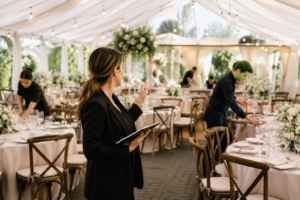
No matter how well an event is planned, something will go wrong. Good problem-solving skills enable event planners to adapt quickly and keep everything moving without disrupting the guest experience.
Common challenges planners face include:
- Rentals arriving late, damaged, or incorrect
- Weather forcing last-minute indoor or tented setups
- Guest count changes that affect layout and inventory
- Vendors running behind schedule or overlapping during setup
- Missing or incomplete items during install
- Venue restrictions that conflict with original plans
Problem-solving in event planning is a skill built through experience, but it can also be developed intentionally.
Planners naturally get better at this skill by:
- Running through “what if” scenarios during the planning phase
- Building backup plans (extra seating, weather contingencies, vendor flexibility)
- Learning how different vendors and timelines interact
- Reflecting after events on what went wrong, and how it was handled
Over time, patterns emerge. You start anticipating issues before they arise and make decisions faster under pressure.
Learn this skill:
Attention to Detail
In event planning, small details don’t stay small for long. Event planners must think through how every piece fits into the larger plan.
Table sizes need to match linens. Place settings need to reflect the final guest count. Rentals need to align with the layout, not just visually but also spatially within the venue. Even timing details, like when certain elements are set up, can affect how the event comes together.
Attention to detail is something planners build over time by slowing down during the planning phase and double-checking assumptions. Many develop systems, such as checklists, diagrams, and final walkthroughs, to ensure that every detail is accounted for before event day.
Learn this skill:
Time Management (Run of Show)
A run of show is the detailed timeline that guides how an event unfolds in real time. It goes beyond a general schedule by breaking the event down into specific moments, transitions, and responsibilities, ensuring everything happens when it should.
In practice, this means mapping out the full guest experience from arrival to exit. When do guests enter? When does cocktail hour begin? When are guests invited to dinner? When do speeches start, and how long should they last? Each of these moments needs to be timed and coordinated so the event flows naturally without awkward gaps or delays.
This is also where multiple vendors need to align. Caterers need to know when to serve. DJs or AV teams need cues for announcements and transitions. Staff need to be in the right place before each phase begins. A strong run of show keeps everyone working from the same plan.
Planners develop this skill by:
- Breaking the event into clear phases (arrival, cocktail hour, dinner, transitions, breakdown)
- Assigning timing and responsibilities to each step
- Building in buffer time for delays or adjustments
- Communicating the timeline clearly to all vendors and staff
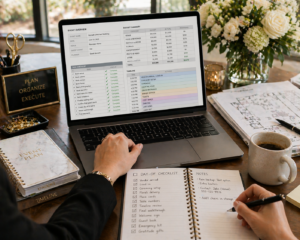
Most planners build their run of show in a shared document or spreadsheet rather than a calendar. This allows them to map out detailed timing, assign responsibilities, and easily share updates with vendors and staff leading up to the event.
Learn this skill:
- LinkedIn Learning – Time Management Fundamentals
- Google Digital Garage – Productivity & Time Management
Leadership
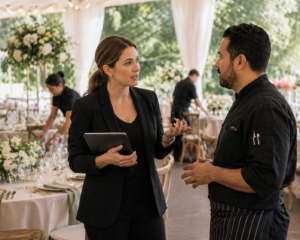
Leadership, in the context of event planning, is the ability to guide people, make quick decisions, and keep everything moving under pressure. This skill shows up most clearly on event day.
On event day, you’re directing staff, coordinating vendors, answering client questions, and solving problems in real time. People look to you for direction, especially when something changes or goes wrong.
Strong event leaders:
- Set clear expectations before the event begins
- Assign roles so everyone knows what they’re responsible for
- Make decisions quickly without second-guessing
- Stay calm under pressure, even when timelines shift
- Step in when needed without micromanaging everything
Leadership also means creating confidence. And when your team and vendors trust that you’re in control, everything runs more smoothly.
Over time, planners build leadership skills by:
- Taking ownership of decisions instead of deferring
- Learning how different roles (staff, vendors, venue) work together
- Practicing delegation instead of doing everything themselves
- Reflecting after events on what worked and what didn’t
When leadership is strong, the event feels organized, even if challenges happen behind the scenes.
Learn this skill:
Budget Management
Budget management in event planning is all about making intentional decisions that maximize impact.
Every event has constraints, and strong planners know how to allocate resources to deliver the best possible experience within those limits.
In practice, this means understanding where the budget matters most. Certain elements, like seating, layout, and overall guest comfort, are foundational. Others can be adjusted without affecting the core experience.
Budget management also requires visibility across the entire event. Adjusting one area, such as increasing the guest count or upgrading rentals, can affect catering, staffing, and layout needs. Strong planners keep in mind how these decisions impact the overall budget.
This skill develops over time as planners learn typical cost ranges, vendor pricing structures, and where flexibility exists. Many also build systems to track expenses, compare options, and make informed trade-offs throughout the planning process.
Learn this skill:
Find Yard Game Rentals with Reventals
Other Blogs You May Find Helpful: