



Whether you’re planning a corporate mixer, industry conference, trade show, or leadership event, choosing the right networking format can have a major impact on attendee engagement and the overall success of the event.
Some networking events work best with structured conversations and guided activities, while others focus on creating relaxed social environments where guests can connect more organically. From speed networking sessions and roundtable discussions to happy hour mixers and executive dinners, each event format offers different opportunities for interaction depending on your audience and goals.
Below are 11 business networking event ideas that can help you create more engaging, productive, and memorable professional events.
1. Speed Networking
Speed networking is a structured networking format that gives attendees a chance to meet multiple people through a series of short, timed conversations. Similar to speed dating, participants rotate through quick one-on-one or small-group discussions, allowing them to make introductions, exchange ideas, and build connections in a short amount of time.
This format works especially well for large conferences, professional association events, startup mixers, and industry meetups where attendees may not know each other beforehand. Speed networking helps remove the awkwardness of traditional mingling by providing guests with a clear conversational structure and equal opportunities to connect.
Because attendees are constantly moving and interacting, this format also works best in open event layouts with cocktail tables, lounge seating, or flexible networking spaces that encourage easy transitions between conversations.
2. Roundtable Networking
Roundtable networking brings attendees together in small groups centered around a specific topic, industry challenge, or shared interest. Unlike traditional mixers, this format is designed to encourage longer, more meaningful conversations between professionals.
To run a successful roundtable networking session, start by organizing tables around clear discussion themes that are relevant to your audience.
Think of topics related to:
- Leadership
- Marketing trends
- Entrepreneurship
- Industry-specific challenges
This can help attendees quickly choose conversations that interest them most.
Keep groups relatively small, usually between 6 and 10 attendees per table, so everyone has an opportunity to participate. If you have people available, assigning a moderator or discussion leader to each table can also help keep conversations focused and prevent one person from dominating the discussion.
Roundtable networking works especially well in seated event layouts with conference tables and quieter networking spaces where guests can comfortably engage in longer conversations. Providing conversation prompts, discussion questions, or timed rotations between tables can also help maintain energy and encourage attendees to connect with more people throughout the event.
3. Breakfast Networking Events
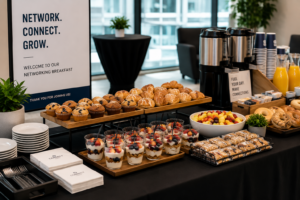
Breakfast networking events offer a more relaxed and professional atmosphere for attendees to connect before the workday begins. These events are typically centered around coffee, light catering, and structured conversation. Unlike highly structured networking sessions, these events are usually more casual and lightly guided, giving guests the flexibility to mingle naturally while still creating opportunities for meaningful conversations.
Offering grab-and-go breakfast items and self-serve coffee stations can also encourage movement throughout the space and make it easier for guests to casually introduce themselves while waiting in line or refilling drinks.
Some easy breakfast catering ideas for networking events include:
- Fresh fruit cups
- Protein bars
- Bagels and cream cheese
- Yogurt parfaits
- Breakfast sandwiches
- Pastries and muffins
- Coffee and juice stations
These foods are super easy to set up on a buffet table and let attendees graze as they arrive.
Because these events are often less structured, it’s important to include subtle conversation starters to help attendees break the ice. Name tags with company names or industry roles, small standing tables, shared seating areas, and simple discussion prompts can all help guests feel more comfortable approaching new people. Hosting a short welcome introduction, featured speaker, or quick attendee icebreaker at the beginning of the event can also help set the tone and encourage interaction before guests begin mingling on their own.
4. Happy Hour Mixers
Happy-hour networking mixers create a more relaxed, social environment for professionals to connect outside a traditional office or conference setting. Typically hosted in the late afternoon or early evening, these events give attendees a chance to unwind after work while building new professional relationships in a more comfortable setting.
Because guests often arrive directly from work, the atmosphere should feel noticeably different from that of a formal corporate event. Comfortable lounge seating, soft lighting, cocktail tables, and smaller conversation areas can help create a more inviting environment where attendees feel encouraged to stay, relax, and engage in longer conversations.
When planning the layout, avoid creating oversized seating areas that leave large groups feeling closed off from the rest of the event. Instead, break the venue into smaller lounge groupings and standing cocktail-table areas that naturally encourage guests to move through the space and interact with different people throughout the evening.
For larger networking mixers, having event hosts, staff, or organizers casually introduce attendees to one another can also help create a more welcoming environment and prevent guests from sticking exclusively with coworkers or familiar groups.
5. Industry Panels
Industry panel networking events combine professional networking with educational discussions led by experts, business leaders, or industry professionals. These events typically feature a moderated panel conversation followed by open networking, giving attendees both valuable insights and natural conversation topics to discuss afterward.
To make an industry panel event feel engaging rather than overly formal, it’s important to balance the presentation with intentional networking opportunities before and after the discussion. Consider keeping the venue open after the panel for cocktails, appetizers, or lounge-style networking to give guests an opportunity to continue conversations sparked by the discussion.
Because guests often gather around shared professional interests at these events, panel topics should be highly relevant and specific to the audience. Discussions focused on industry trends, leadership challenges, emerging technology, entrepreneurship, or local business issues tend to generate stronger engagement and more meaningful conversations afterward.
Industry panel networking events work especially well for conferences, chambers of commerce, trade associations, corporate networking groups, and professional organizations looking to combine thought leadership with relationship-building opportunities.
6. Networking Workshops
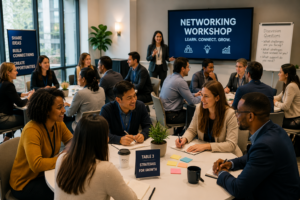
Networking workshops combine professional development with interactive networking opportunities. Instead of relying solely on open mingling, these events bring attendees together through collaborative learning sessions, group discussions, or hands-on activities that naturally encourage conversation and participation.
Workshop-style networking events typically focus on a specific topic relevant to the audience, such as leadership development, marketing strategy, entrepreneurship, communication skills, or industry trends.
Attendees may participate in:
- Breakout discussions
- Guided exercises
- Brainstorming sessions
- Collaborative problem-solving activities
Because guests are actively engaging with one another during the workshop, this format often feels more approachable than traditional networking mixers. Shared activities help remove the pressure of starting conversations from scratch and create more natural opportunities for attendees to connect over common interests and experiences.
7. Co-working Socials
Co-working networking socials create a more casual, flexible environment where professionals can connect while working, collaborating, or spending time together in a shared space. These types of events are often hosted in coworking spaces, lounges, cafés, or creative office environments. Co-working social networking events are not designed to feel like a formal networking function.
Unlike traditional mixers, where networking is the primary focus from the moment guests arrive, co-working socials allow conversations to happen more naturally throughout the event. Attendees may spend part of the event working independently, joining small discussions, collaborating on ideas, or casually connecting with others during coffee breaks or social periods.
To make this type of networking event successful, it’s important to create a space that feels comfortable and low-pressure. A mix of communal worktables, lounge seating, café-style areas, and quieter corners gives attendees flexibility in how they participate throughout the event. Reliable Wi-Fi, accessible charging stations, and comfortable seating are also essential since many guests may bring laptops or plan to work during part of the gathering.
Because attendees won’t necessarily interact automatically, it helps to build in a few natural connection points throughout the event. Scheduled coffee breaks, light networking prompts, collaborative discussion tables, or optional group activities can encourage conversations without making the event feel overly structured. Offering casual food and beverage options such as coffee bars, pastries, sandwiches, snack stations, or happy-hour drinks can also help create natural gathering areas where attendees feel more comfortable starting conversations.
8. Fireside Chats
Fireside chat networking events combine informal speaker discussions with relaxed networking opportunities, creating a more conversational and engaging atmosphere than a traditional panel or presentation. These events typically feature a moderator-led discussion with an industry leader, entrepreneur, executive, or expert, followed by audience interaction and open networking.
Because the format is designed to feel personal and approachable, the event setup should reflect that same tone. Lounge seating, soft lighting, smaller stage setups, and comfortable conversation areas can help create a more intimate environment that encourages attendees to relax and stay engaged throughout the discussion. Instead of a large conference-style layout, fireside chats often work best with a semi-circular seating arrangement, cocktail tables, or lounge furniture that keeps the audience feeling connected to the speaker.
To encourage interaction beyond the discussion itself, many fireside chat events include a networking reception before or after the conversation. Offering light appetizers, cocktail service, coffee stations, or lounge-style gathering spaces gives attendees an opportunity to continue discussing the topics introduced during the chat while connecting with other professionals in a more casual setting.
9. Trade Show Networking Lounges
Trade show networking lounges give attendees a dedicated space to step away from crowded booths and have more meaningful business conversations throughout an event. Rather than relying entirely on aisle interactions or brief introductions on the trade show floor, networking lounges create a comfortable environment where exhibitors, attendees, sponsors, and industry professionals can sit down, recharge, and connect more intentionally.
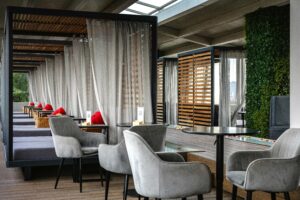
To make a networking lounge successful, focus on creating a space that feels noticeably more relaxed than the surrounding trade show environment. Comfortable lounge seating, charging stations, cocktail tables, soft lighting, and quieter conversation areas can help attendees slow down and stay longer between sessions or meetings. Since trade shows can feel overwhelming and fast-paced, offering a calmer environment often encourages deeper conversations and stronger networking opportunities.
Positioning the lounge near high-traffic areas like keynote entrances, food stations, or registration zones can further increase visibility and naturally draw attendees into the space between sessions. Simple signage can make a major difference here. Placing signs like “Networking Lounge,” “Meet & Connect,” or “Industry Networking Area” at the entrance helps attendees immediately understand that the space is designed for conversation and professional interaction, not just a place to sit and recharge.
10. Executive Dinners
Executive networking dinners create a more exclusive, relationship-focused environment where professionals can connect through small-group conversations over a shared meal. Unlike large networking mixers or conferences, these events are designed to encourage deeper discussions, stronger business relationships, and more intentional connections between attendees.
One of the most important parts of planning an executive networking dinner is controlling the flow of conversation throughout the evening. Round tables typically work best because they allow everyone to participate more naturally, while long banquet-style seating can unintentionally split conversations into smaller side groups. Keeping table sizes relatively small — usually six to eight guests — also helps conversations feel more engaging and prevents attendees from feeling disconnected from the discussion.
The dining experience itself should support networking rather than compete with it. Loud restaurants, crowded buffet lines, or venues with fast-paced service can interrupt conversations and make the evening feel rushed. Instead, focus on venues that allow guests to stay seated comfortably for extended periods of time without frequent interruptions.
It’s also helpful to think intentionally about how guests arrive and transition into the dinner itself. Starting the evening with a short cocktail hour or lounge reception gives attendees time to meet casually before sitting down for a more structured conversation. Assigned seating can be especially valuable for executive networking dinners because it helps mix industries, companies, and personalities, rather than allowing attendees to default to familiar coworkers or existing connections.
11. Mentor Networking Events
Mentor networking events are designed to connect experienced professionals with newer professionals, students, entrepreneurs, and emerging leaders seeking guidance, career advice, and industry insights. Unlike traditional networking mixers, where conversations tend to be more random, mentor-focused events foster more intentional one-on-one or small-group interactions that help attendees build meaningful professional relationships.
To make a mentor networking event successful, structure is important, but the experience should not feel overly formal. Many events use timed mentor rotations, small group discussions, or designated mentoring tables to help attendees connect with multiple professionals throughout the event. Keeping conversations relatively short — often around 10 to 20 minutes — can help maintain energy while giving attendees opportunities to meet several mentors during the event.
One of the biggest challenges with mentor networking events is helping attendees feel comfortable starting conversations. Providing suggested discussion prompts, career-focused conversation cards, or topic signage at tables can help reduce awkwardness and make interactions feel more approachable for mentors and participants alike.
Need Rentals for Your Networking Event?
The right networking event format can make all the difference in how attendees connect, engage, and remember your event. Whether you’re planning a speed networking session, happy hour mixer, executive dinner, or trade show lounge, creating comfortable spaces for conversation and interaction is key to building a successful experience.
At Reventals, we help businesses, event planners, and organizations create professional networking environments with lounge furniture, cocktail tables, seating, catering equipment, trade-show rentals, and event essentials designed to foster meaningful guest interaction. From corporate mixers and conferences to networking lounges and leadership events, our rental inventory can help you create a space that feels welcoming, polished, and intentionally designed for connection.
Browse event rentals to start planning your next networking event with Reventals.